Iran’s judiciary says it has filed a case against a veteran ecologist and former adviser to the Department of Environment, after he said the government could fix Iran’s high-pollution mazut fuel with the cost of developing ten missiles.
Iranian media on Monday described the charges against Esmail Kahrom as relating to making “false statements” and actions “against national security.”
Prosecutors also opened a case against the editor-in-chief of the Jamaran news site, which published Kahrom’s interview.
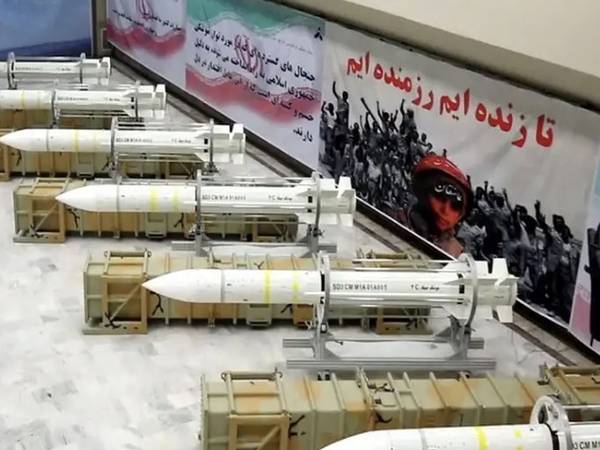
In the November 30 conversation, Kahrom said that each missile costs roughly two million dollars and argued that if public health mattered to officials, they could redirect the equivalent of 10 missiles to upgrade fuel standards. He said authorities refused because “their priorities lie elsewhere.”
Iran, one of the largest oil and gas producers in the world, is facing a severe natural gas shortage. That shortage has prompted refineries to bulk out the fuel's volume with other substances, like mazut which environmentalists believe has played a major role in Iran's worsening air pollution.
Kahrom warned that the mazut used in Iran contains sulfur levels “seven times the global standard,” and that domestic fuel quality is also inadequate. His comments triggered sharp pushback from state-affiliated outlets.
Mazut, the non-standard gasoline contains harmful additives and has significantly contributed to the air pollution crisis in the country.
The use of the low-grade fuel mazut by power plants in Iran has been linked to severe harm to public health and even fatalities, with Iranians frequently expressing frustration over the worsening air quality and pollution in many cities.
State media dismiss environmental concerns
Young Journalists Club, tied to state broadcaster IRIB, wrote that “certain groups believe defense budgets should be spent on the environment,” calling national security a nonnegotiable necessity and portraying environmental debates as a distraction.
Farhikhtegan, a newspaper affiliated with the state-run Islamic Azad University, similarly argued – referencing the 12-day war with Israel – that critics forget “without deterrence, the cost of war would far outweigh any air pollution.”
Environmental warnings have frequently been downplayed or mocked by officials and pro-government media. Past concerns over water scarcity, energy crises, deforestation and land subsidence have met similar resistance.
A prominent example was the campaign against hydrologist Kaveh Madani, who faced accusations of espionage after warning of impending water collapse and ultimately left the country.
Iran has faced worsening air pollution in recent years alongside severe water and energy shortages, with experts tracing the crisis to aging infrastructure, poor fuel quality and policy inaction.