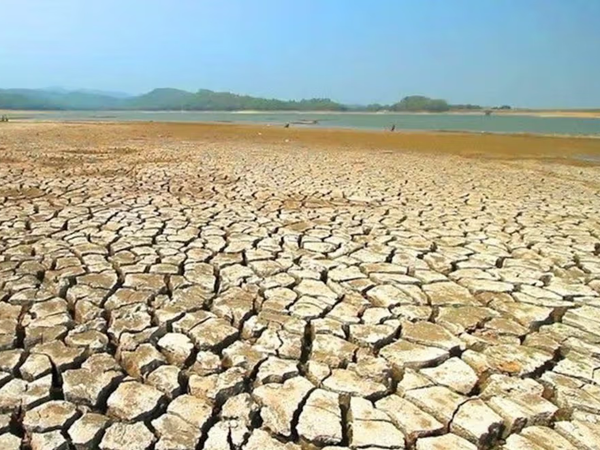
Iran’s soil is nearing bankruptcy, a senior agriculture official warned on Saturday, saying the country’s food production outlook will sharply deteriorate without urgent intervention.
Widespread awareness has not translated into action, Hadi Asadi-Rahmani, head of the Soil and Water Research Institute of Iran said at the World Soil Day conference in Ghazvin.
“We all know Iran’s soil is growing poorer, and without urgent action, the future of food production will face serious risk,” Asadi-Rahmani added.
Iran has 165 million hectares of land, of which only 24 million are arable. Half of national crop output, Asadi-Rahmani said, now comes from class-three and class-four lands.
He warned that continuous extraction, insufficient fertilizer inputs and erosion are pushing the country toward a structural crisis. “Seventy-five percent of Iran’s soils have less than one percent organic carbon,” he noted. “This shows how exhausted our soils have become.”
Roughly 30,000 hectares of land, according to him, degrade each year, reflecting patterns similar to the country’s water crisis.
Water authorities warn of parallel emergency
Iran is in its sixth consecutive year of drought, Arash Kordi, deputy minister of energy, also said on Saturday.
“Even with normal rainfall, current extraction patterns have no compatibility with Iran’s climate,” Kordi added.
“Delaying reforms directly threatens people’s livelihoods and the foundations of the country.”
Specialists warn of shrinking reserves
Dry conditions have pushed reservoirs in several provinces to record lows. Officials in the religious city of Mashhad have moved to full rationing, and parts of Kerman in the south report farmland abandonment linked to groundwater loss. Nationwide rainfall has dropped to about 18 percent of typical levels.
The twin crises of soil depletion and water scarcity, officials said, now reinforce one another. Asadi-Rahmani warned that postponing decisions would make damages irreversible.
Experts blame decades of over-extraction, unchecked urban growth and placing water-hungry industries in the desert – alongside drier weather – for pushing groundwater sources and lakes to the brink.