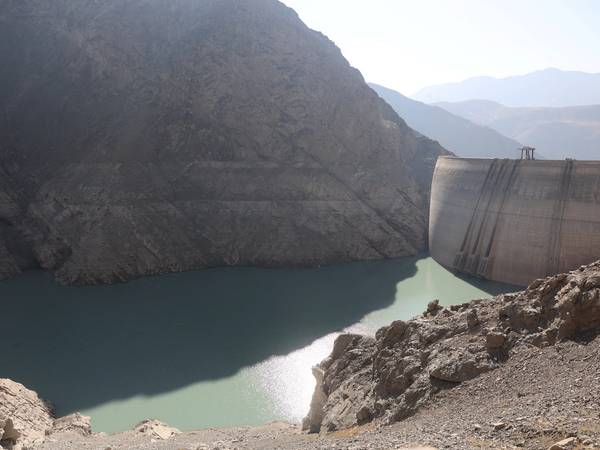
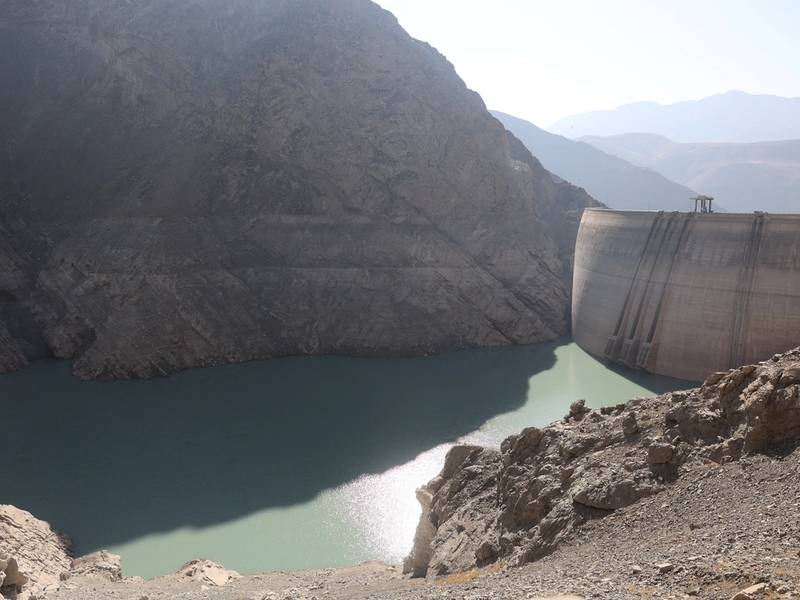
An Iranian water official said the volume of drinking water stored in Tehran’s five main dams has fallen to about 170 million cubic meters, roughly half the level recorded at this time last year.
Rama Habibi, a deputy at the Tehran Regional Water Company, told ISNA that the capital is experiencing its most persistent dry spell in six decades.
“For the first time in 60 years, we have had five consecutive years of drought,” he said.
Habibi added that rainfall since the start of the current water year in early October has been “very minimal.” He said Tehran recorded 48 millimeters of rain in the same period last year, compared with just 1.9 millimeters this year.
“We are facing a 96 percent reduction in rainfall compared with last year,” he said, adding that long-term averages also show a drop of nearly 98 percent.
Drought reshapes dam operations
The prolonged dry period has pushed reservoir levels across Iran to historic lows. The country’s Karkheh Dam hydroelectric plant was forced to halt power generation last week due to the shrinking water level in its reservoir.
Officials said the dam’s basin has endured years of drought, with water now flowing only through lower outlets to meet downstream needs.
Karkheh, one of the region’s largest dams, is among many facilities confronting shortages. Domestic media say reservoirs feeding Tehran’s Karaj and Latian dams have fallen sharply, and cities such as Mashhad, Kerman and Yazd are grappling with collapsing aquifers and, in some cases, water rationing.
Habibi said that in past years, rainfall returned to normal after short dry spells, but the current prolonged drought means “the outflow from the dams exceeds the inflow,” pushing storage to what he called alarmingly low levels. Long-term data indicate average storage of about 509 million cubic meters, leaving the current figure at roughly one-third of that amount, he said.
Warnings of broader strain
Authorities in several provinces warn that diminishing reserves could bring deeper disruptions if dry conditions persist. In Mashhad, officials have already moved to full rationing, while parts of Kerman report abandoned farmland due to groundwater depletion. Nationwide, rainfall has dropped to around 18 percent of normal levels, with 20 provinces reporting no measurable precipitation in recent weeks.
Water specialists quoted by local media say that if current patterns continue, significant parts of Tehran could face severe supply instability within the next decade.