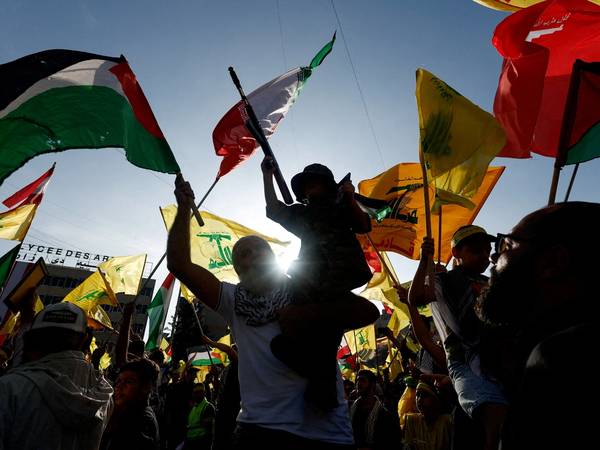
Iraq will remove Lebanon’s Hezbollah and Yemen’s Houthis from an asset-freeze list after the Iran-aligned groups were included in an official publication, officials said on Thursday.
The Justice Ministry’s gazette carried a committee decision freezing funds of designated entities and, in error, named Hezbollah and the Houthis, according to Reuters.
A letter from the acting deputy governor of the Central Bank asked the Committee for the Freezing of Terrorists’ Funds to delete the clause, two bank sources was cited by the outlet.
Tasnim, an outlet close to Iran’s IRGC, framed Baghdad’s correction as a climbdown under intense public and political pressure, saying Iraq’s Central Bank “backed off” after outrage over the Gazette notice.
Prime Minister Mohammed Shia’ al-Sudani said Iraq had approved freezing only the assets of entities and individuals linked to Islamic State and al Qaeda, in line with UN Security Council Resolution 1373 and following a request from Malaysia.
He ordered an urgent investigation “to hold accountable those responsible” for the mistake and stressed Baghdad’s stance on Lebanon and the Palestinians was “principled and not subject to exaggeration.”
The clarification followed publication in issue No. 4848 of the Iraqi Gazette of Decision No. 61 by the Committee for the Freezing of Terrorists’ Assets, which named 24 entities and ordered their funds frozen.
The committee is chaired by Central Bank Governor Ali Mohsen al-Alaq, with members from the anti-money-laundering office and the ministries of finance, interior, foreign affairs, justice, trade, communications, and science and technology, as well as the integrity, intelligence and counter-terrorism bodies.
The committee said on Thursday that the publication was meant to cover ISIS- and al-Qaeda-related listings only and that unrelated groups appeared because the list was released before final revisions were completed. It said a corrected version will be printed in the official gazette.
Publication of the committee’s decision in the Justice Ministry’s gazette led some outlets to report that Hezbollah and the Houthis had been designated terrorist entities, prompting denunciations from politicians aligned with Iran-backed factions.
Hussain Mouanes, a lawmaker from a bloc affiliated with Kataeb Hezbollah, called the government’s conduct “irresponsible” and accused it of failing to defend Iraq’s sovereignty.
Lawmaker Mustafa Sanad, who shared the gazette and is aligned with Popular Mobilization Forces-linked blocs, condemned the designations on social media.
Iraq has balanced relations with both the United States and Iran, but faces mounting risks to its financial system if it falls foul of global sanctions regimes.
Hezbollah and the Houthis are key members of a broader network of Iran-backed groups across the region.
Iran views Iraq as a strategic economic and political partner amid Western sanctions, while Baghdad remains wary of being drawn into US efforts to squeeze Tehran and its regional allies.