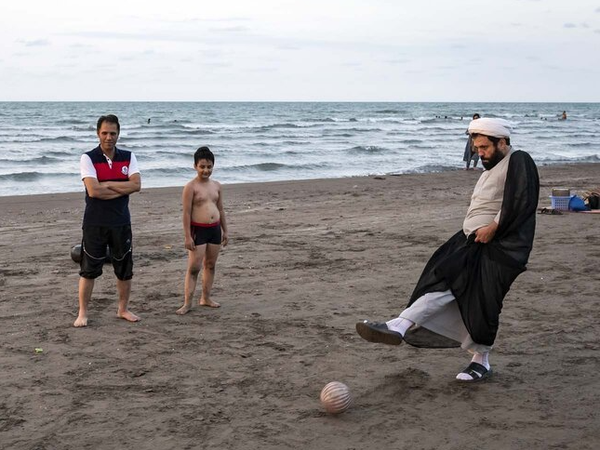
A state-appointed cleric's request to set aside a beachside plot on the southern holiday island of Kish for his office stoked criticism this week after the proposal appeared online.
The Asr-e Iran news outlet direct a sharp rebuke at Alireza Biniaz, the Kish Friday prayer leader in the form of a lengthy commentary. Friday prayer leaders are official positions appointed by Supreme Leader Ali Khamenei's office.
“What does a special beach for the Friday prayer leader and his friends even mean? Was wanting special treatment in other areas not enough – now a special beach too?” the outlet said.
“You go to university with special privileges, get hired with special privileges, use a privileged internet line, and then go to Kish to stay at a special beach?” Asr-e Iran wrote.
Biniaz's original letter was addressed to Mohammadjafar Kabiri, the head of the Kish Free Zone Organization. Earlier discussions with the economy minister, Biniaz wrote, had produced an understanding to build and operate a special beach for the Friday prayer institution.
He urged officials to expedite and finalize its allocation to allow access for “devout individuals, committed citizens, officials and special guests.”
Public spaces and equal access
Asr-e Iran rejected dividing society into categories of devotion. “Why insist on separating society into devout and non-devout?” it said. “It is the right of all Iranians to enjoy the island’s amenities, and the degree of anyone’s devotion is not for the Friday prayer leader of Kish – or anywhere else – to determine,” the website added.
The outlet asked President Massoud Pezeshkian to verify the letter’s authenticity and assess any role played by the economy ministry, arguing that inaction would reinforce perceptions of privileged access for clerics.
Earlier cases reflect a wider pattern
This is not the first time Friday prayer leaders and figures close to Supreme Leader Ali Khamenei have sought special advantages for themselves, with their names appearing in economic corruption files and similar cases.
In March 2024, journalist Yashar Soltani published documents revealing financial misconduct by Kazem Sedighi, then the Tehran Friday prayer leader, involving the 4,200-square-meter property valued at roughly ten trillion rials ($8.85 million).
The property, which had been under the control of a seminary managed by Sedighi, was transferred for only 66 billion rials ($58.4 thousand).
After widespread criticism and a strong public reaction, Sedighi eventually wrote to Khamenei in August seeking “to be excused from leading Friday prayers in order to focus on academic, teaching and preaching work,” a request the Supreme Leader approved.