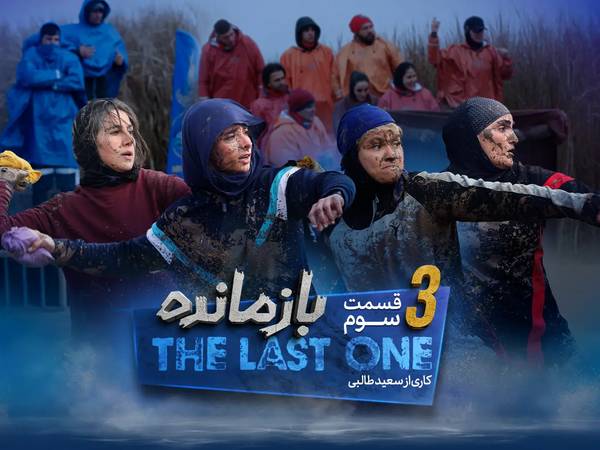
Iran’s online media regulator has suspended the platform streaming a hit reality show after a segment showing contestants pelting targets resembling ancient Persian emblems sparked a public backlash, the latest move in a push to rally support via once-taboo nationalism.
The Organization for Regulating Audio-Visual Media in Cyberspace (known as SATRA) said the platform carrying Bazmandeh (Survivor or The Last One) was stopped for posting a video deemed to include “insults to national and patriotic symbols,” and for lacking required licenses, according to statements carried by state media.
SATRA officials added that the show and its distributor had not obtained valid production or release permits.
Coverage of the story across Iranian media described the act as disrespect toward symbols tied to Iran’s pre-Islamic heritage.
Cultural scholars quoted by the official ISNA news agency called the sequence “symbolic violence,” urging tighter editorial standards around heritage imagery and pointing out that entertainment formats typically use neutral targets rather than identity-laden icons.
The debate drew thousands of online comments and highlighted heightened sensitivities around Achaemenid-era motifs such as Persepolis reliefs.
An ISNA article said the show’s producers lacked a current SATRA license and that the platform was taken offline pending legal follow-up. SATRA did not say whether Bazmandeh would be allowed to resume or face additional penalties.
Separate coverage by Rouydad24 detailed the symbols shown and amplified criticism from social media users who argued that converting the Homa and Derafsh Kaviani into “smash targets” trivialized collective identity.
Some posts also faulted presenters Siamak Ansari and Mehran Ghafourian; the report paraphrased producers as saying their intent was to showcase national identity, a rationale that critics rejected.
In recent days some outlets framed the controversy as a test of media ethics and licensing oversight in Iran’s streaming sector.
Alireza Hasanzadeh, anthropologist and associate professor at Iran’s Research Institute of Cultural Heritage and Tourism, told ISNA, “Professional broadcasters follow a clear code of ethics: identity symbols must not be subjected to symbolic violence, insult or defacement... Attacking identity, cultural and national symbols is effectively an attack on the identity of a people and a land.”
Nationalism as tool
Iranian officials have increasingly highlighted pre-Islamic history and iconic figures – once marginalized in official narratives – to promote unity and reclaim legitimacy after the June war with Israel and deepening domestic discontent.
For decades, authorities suppressed many expressions linked to Iran’s ancient heritage, viewing them as rivals to the Islamic Republic’s ideological identity.
Now, however, the same symbols are being invoked to police behavior, discipline artists, and regulate digital platforms, even as critics argue the sudden embrace of nationalism is a performative response to a legitimacy crisis rather than a genuine cultural reorientation.
The move against the reality show comes weeks after Iranian authorities handed a six-month prison sentence to comedian Zeinab Mousavi for a joke about Ferdowsi, the 10th-century poet behind Iran’s national epic, the Shahnameh.
Mousavi, known for her satirical online persona “Empress Kuzcooo,” was convicted over a comedy segment reciting verses from the Shahnameh with irreverent commentary.
The court ordered her to prepare a supervised thesis on Ferdowsi’s role in Iran’s national identity and to conduct at least 120 hours of storytelling sessions for children using Shahnameh material.
The Shahnameh (Book of Kings) by Ferdowsi tells mainly the mythical and to some extent the historical past of the Persian Empire from the creation of the world until the Arab invasion of Persia in the seventh century, which turned the country into a Muslim state.
National symbols 'insulted'
Clips from the Bazmaneh reality competition showed contestants hurling objects at a wall of puzzle tiles decorated with stylized versions of well-known motifs from ancient Iran.
Viewers and local outlets said the designs evoked three icons: the Homa (a mythic bird of fortune), the Derafsh Kaviani (the epic banner of revolt), and a griffin (shir-dal) like those carved at Persepolis.
The imagery was illustrative – patterns inspired by antiquity rather than replicas of any single artifact – but it touched a nerve because these motifs sit at the heart of Iran’s cultural memory.
The Homa – often conflated in everyday speech with the Simurgh – is a legendary bird in Persian lore said to bestow luck or even kingship when its shadow falls on someone.
As a benevolent emblem, it appears in poetry, miniature painting, carpets, and public art, making it a shorthand for good fortune and legitimacy.
The Derafsh Kaviani is the banner raised by Kaveh the Blacksmith in Ferdowsi’s Shahnameh against the tyrant Zahhak. Over centuries it has become a literary symbol of justice, resistance, and popular sovereignty – less a military standard than a moral one.
That association is why many viewers read the scene as an affront to a core tale of Iranian defiance.
The griffin (shir-dal) – a composite lion-eagle – repeats across Achaemenid art, including architectural elements and reliefs at Persepolis.
In plain terms, it works as a guardian motif: the lion for strength, the eagle for vigilance and vision. To many Iranians, it signals royal authority and protective power, so depicting it as a target struck some as trivializing a protective emblem woven into the country’s ancient visual language.