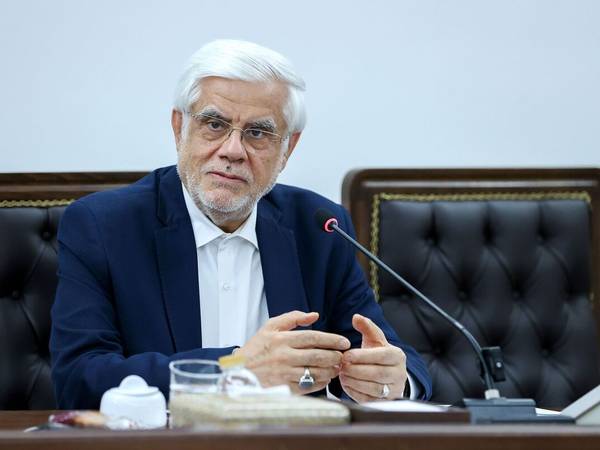
Iran’s vice president told parliament on Monday that the government must adapt implementation of the Seventh Development Plan to the country’s current conditions, citing financial shortfalls, sanctions pressure and post-crisis constraints that have reshaped policy priorities.
Mohammad Reza Aref said the administration aimed to preserve social calm while preparing for “special and wartime conditions” to meet public demands, adding that many provisions of the seven-year plan require revision due to budget gaps and inherited debts.
He said the implementation of the plan must align with both its mandates and available resources, adding that the country faces structural imbalances.
He pointed out that an estimated 3 quadrillion rials (about $2.7 billion) in losses in the power and industrial sectors have weighed on economic growth.
Iran’s Seventh Development Plan, launched in 2023, is a five-year blueprint for economic, social, and cultural development aimed at reversing stagnation and reducing reliance on oil revenues. The plan targets an average 8% annual GDP growth, expansion of non-oil exports, and greater private sector investment.
The vice president told lawmakers that Iran lacks the €100 billion required to implement Article 115 of the Seventh Development Plan, which focuses on modernizing the country’s forensic and legal medicine system, and urged parliament to coordinate with the government on possible amendments.
He said the administration has moved to clear $6 billion in feedstock import debts inherited from the previous administration and stressed that strategic reserves remain sufficient to meet essential needs.
Aref added that under Articles 118 and 119 of the plan, the government is legally required to submit regular performance reports to parliament. So far, all ministries and agencies have delivered biannual progress reports to the High Council for Coordination and Oversight, enabling the government to compile its first annual assessment of implementation.
He said the Seventh Plan includes 2,179 policy clauses across 120 articles and outlines 35 national programs designed to advance growth, stability, and social justice.
Aref acknowledged, however, that several provisions, notably Article 115, remain financially unfeasible under current conditions, and called for joint legislative review to adjust targets in line with available funding.
“The Seventh Plan,” Aref said, “is a covenant among all three branches of power,” adding that its success depends on cross-sector coordination and flexibility to adjust policies as economic realities evolve.
President Masoud Pezeshkian is set to address lawmakers on Tuesday about the implementation of the plan.