A senior foreign policy adviser to Iran’s Supreme Leader Ali Khamenei on Friday questioned whether a military offensive by Yemeni allies of the United Arab Emirates served the United States and accused Abu Dhabi of imperialist aggression.
Ali Akbar Velayati's remarks on X were a rare sharp public rebuke to one of Iran's Arab neighbors across the Persian Gulf, with whom Tehran has long feuded but has shifted toward detente in recent years as pressure from the United States and Israel mounted.
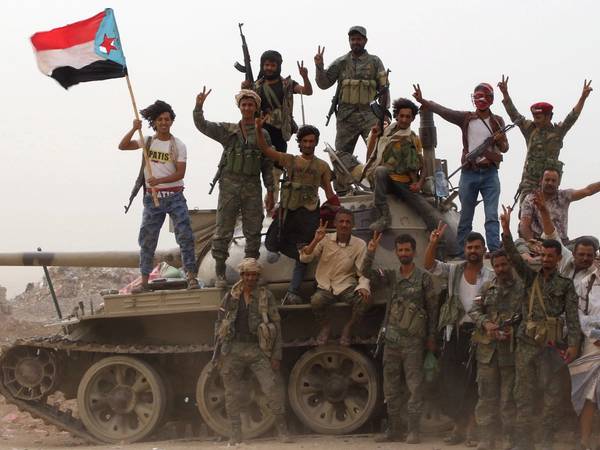
The Southern Transitional Council, a separatist force in Yemen which has long been backed by Abu Dhabi, jolted the stalemated conflict in that country this week.
Their surprise march on oil-rich southeastern territory aims to strengthen their bid to revive an independent state of South Yemen.
The armed Houthi movement, a foe of the STC, is not directly challenged by the latest fighting but their patrons in Tehran appear rattled.
"The government of the UAE must be asked: What were you doing in Yemen?" Velayati wrote. "Are you also interested in claiming ownership of the Bab al-Mandeb Strait? Why did you occupy the island of Socotra, and what was its connection to America’s maritime ambitions? Do you also claim ownership over this island and over the Strait of Hormuz?"
Velayati is a veteran stalwart of high level decision-making circles in the Islamic theocracy and his statements are widely viewed to reflect Khamenei's thinking.
The oil-rich Emirates, a tourism and trade hub, sees itself as a rising regional power and has backed allies in conflicts marring Libya, Sudan, Somalia and Yemen.
It maintains a military presence on the remote Arabian Sea island of Socotra and has economic interests in ports in Djibouti and the breakaway republic of Somaliland.
Joining a regional conflagration pitting Iran's armed allies against Israel, the Houthis in Yemen launched attacks on international shipping for two years until a Gaza ceasefire in October in the Red and Arabian seas connected by the Bab al-Mandab strait.
The United States and its Persian Gulf allies viewed the attacks as a bid to expand Iranian hegemony in the strategic chokepoint leading to the Suez Canal.
Washington, in an annual national security assessment released earlier on Friday, downplayed the threat from Iran after US attacks on its nuclear facilities in June but vowed to keep the Straight of Hormuz open.
Tehran officials have repeatedly vowed to close the waterway, through which much of the world's energy exports from both Iran and the Arabian Peninsula flows, in the event of a conflict.
'Fantastical transnational empire'
Velayati went on to accuse Abu Dhabi of killing Muslims in a bid to build a regional empire in connivance with a Western colonial agenda.
"The blood of tens of thousands of Muslims in Yemen — and now in Sudan — has been spilled as a result of your expansionist policies. It must now be asked: What does the UAE want from Sudan," he said. Will you answer whether you are cooperating with Britain in Sudan or not?
"Why, in the view of many analysts, do your actions raise suspicions of an attempt to build a 'fantastical transnational empire'?" he added.
Tehran and Abu Dhabi have long been at loggerheads over three Persian Gulf islands controlled by Iran since 1971 but claimed by the United Arab Emirates.
Greater Tunb, Lesser Tunb and Abu Musa islands have been held by Tehran since they were seized by the Shah after the withdrawal of British forces from the region. Voices across the fractured Iranian political spectrum reject UAE claims, which are backed by Europe and the United States.
"Are your repeated empty claims regarding the Iranian islands also part of this cooperation with colonial powers?" Velayati continued. "How can anyone claim ownership of Abu Musa, which belonged to Iran thousands of years before the formation of the United Arab Emirates?"
"The patience of the Iranian people is not unlimited."