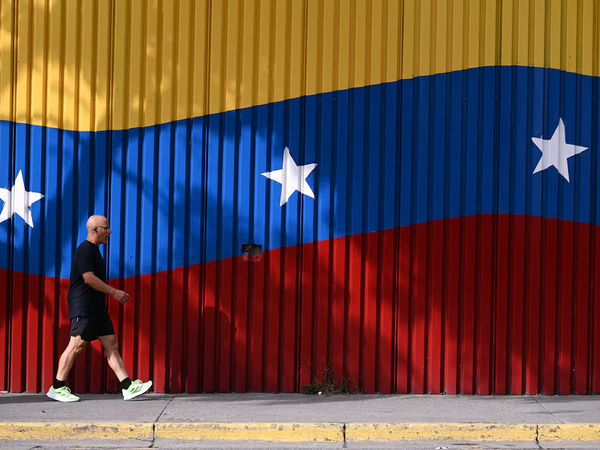
Iran’s foreign ministry accused the United States of endangering international peace at its weekly briefing on Monday, responding to Washington’s latest warnings against Venezuela.
“The United States has turned into the biggest threat to international peace and security with the conduct it has displayed in recent years,” Foreign ministry spokesman Esmail Baghaei said.
He said Washington had used coercive pressure across the Western Hemisphere – citing Venezuela, Cuba, Nicaragua, Brazil and Mexico – and called the proposed airspace closure “an unprecedented act that violates international law, especially aviation safety norms.”
Baghaei said such measures should be scrutinized by the UN Security Council as “clear violations of the UN Charter’s prohibition on the use or threat of force.”
His comments followed confirmation by Trump on Sunday that he had spoken by phone with Venezuelan President Nicolás Maduro.
Washington’s confrontation with Caracas has escalated as US officials accuse figures around Maduro of involvement in narcotics trafficking through the so-called Cartel de los Soles.
The US has increased maritime and air patrols in the Caribbean and carried out interdictions of suspected smuggling vessels. Caracas has denounced the operations as unlawful aggression.
Over the weekend, Trump said Venezuela’s surrounding airspace should be considered “closed in its entirety,” a declaration that heightened uncertainty in Caracas as pressure on Maduro intensifies.
Asked whether the comment implied imminent military action, Trump said, “Don’t read anything into it.”
Saudi deputy foreign minister visits Tehran
Baghaei also addressed the visit of Saudi Arabia’s deputy foreign minister, saying the trip extended a two-year process of rebuilding bilateral relations.
He said discussions covered both Iran-Saudi ties and shared regional concerns, including the situations in Lebanon and Syria.
“This is a process both countries are determined to continue in order to strengthen trust and understanding among regional states,” Baghaei said.
Contacts with Europe
Foreign Minister Abbas Araghchi’s recent visit to France, Baghaei said, was held at the invitation of his French counterpart to discuss bilateral and international matters.
The nuclear file, he said, was among the topics raised but not the sole focus.
A separate call between Araghchi and EU foreign policy chief Kaja Kallas had been arranged earlier, he added, though the Paris trip was also discussed during their conversation.
Iran’s nuclear case remains at an impasse as tensions persist between Iran and Western powers led by the United States over uranium enrichment and international inspections. The International Atomic Energy Agency continues to warn about reduced monitoring access.
Iran’s engagement with European officials, he said, remained “ongoing and structured,” with diplomacy aimed at clarifying positions rather than opening new channels.