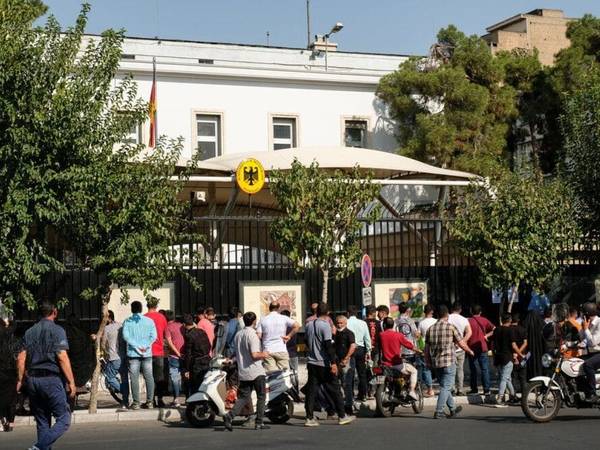
Germany’s embassy in Tehran is operating with sharply reduced visa capacity and expects constraints to persist, the Foreign Office said, citing Iran’s restrictive accreditation of diplomatic staff and significant technical hurdles at post.
The ministry told Iran International that since the June 2025 Iran-Israel hostilities, the embassy has worked in a limited capacity, and both the embassy and its visa section “will, for the foreseeable future, have only a fraction of the personnel” they had before the temporary shutdown.
The reduction of operations “is due in particular to Iran’s restrictive policy on accrediting diplomatic personnel,” read the statement.
Despite the squeeze, Berlin said processing has been gradually expanded in recent weeks by outsourcing application intake to an external service provider and moving case handling to the Federal Office for Foreign Affairs.
“These steps have created additional processing capacity,” the ministry said, adding that the changes especially benefit student-visa applicants and Iranian physicians applying for visas to complete professional recognition procedures in Germany.
Appointment rules have also been adjusted “to ensure the largest possible number of applications can be accepted via the external provider,” the Foreign Office said.
It cautioned, however, that “despite these tangible improvements,” limitations at the Tehran post will remain for the time being.
Germany’s visa services in Tehran have operated at reduced capacity since the June 2025 Iran–Israel conflict, when the embassy temporarily closed, canceled appointments, and said new dates would be issued automatically as capacity allows.
Applicants report prolonged delays and uncertainty, staging weekly protests outside the embassy and TLScontact.
Iranian paper Shargh estimated more than 6,000 delayed cases, including about 4,000 family-reunification files, while IRNA previously put 3,000–4,000 Iranian passports as stuck in foreign missions after wartime closures.