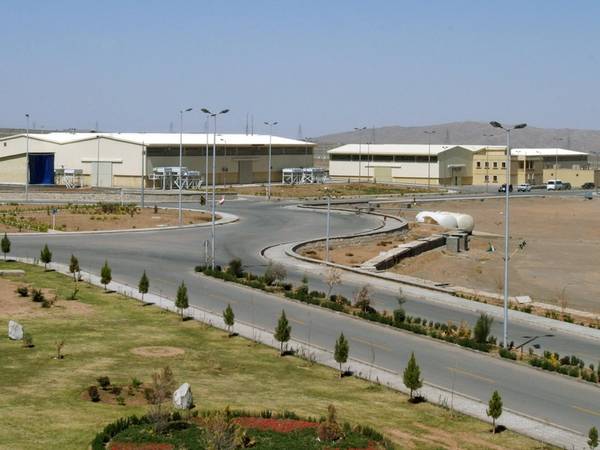
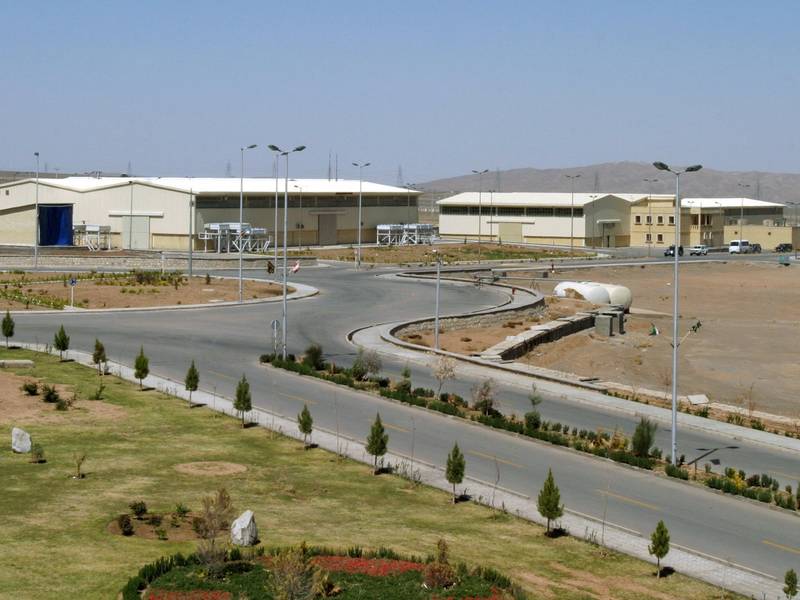
Iran has continued construction at a major underground nuclear site near Natanz months after US and Israeli strikes damaged key facilities, new satellite images show, according to a report by the Center for Strategic and International Studies (CSIS).
The Center for Strategic and International Studies (CSIS) said in a report published Monday that Iran “has stepped up construction” at the so-called Pickaxe Mountain site, about one mile south of Natanz.
CSIS said satellite images taken between late June and late September showed Iran building a security wall around the facility, expanding tunnels, and covering several entrances with gravel and sand. “The increased activity points to the renewed need for greater transparency into Iran’s nuclear activities and ambitions,” CSIS analysts Joseph Rodgers and Joseph S. Bermudez Jr. wrote.
The researchers said it was unclear whether Iran was completing a planned centrifuge-assembly hall or repurposing the site to move other sensitive nuclear work underground. They said Iran could also be preparing a clandestine enrichment facility using its remaining stockpile of 400 kilograms of uranium enriched to 60 percent.
The report also said imagery of Iran’s other main nuclear sites -- Fordow, Natanz, and Isfahan -- showed “virtually zero activity or attempts to rehabilitate” damaged facilities.
Construction and site security
A separate report published earlier this month by the Institute for Science and International Security (ISIS) said satellite images from September showed progress on the security perimeter and finishing work on tunnel entrances at the same site. The report said the site was not yet operational and that activity was focused on construction and reinforcement.
The area, known as Pickaxe Mountain or Mount Kolang Gaz-La, has been under development since 2020, when Iran announced plans to build a new centrifuge facility there after a fire at the Natanz enrichment plant.
Iran restricts IAEA access
Iranian Foreign Minister Abbas Araghchi told parliament on Monday that International Atomic Energy Agency (IAEA) inspectors had not been granted access to any sites damaged during the June conflict.
“In recent inspections, the IAEA was not granted access to the sites targeted during June’s war; only two inspections — of the Bushehr power plant and the Tehran research reactor — were carried out with authorization from Iran’s Supreme National Security Council,” he said, according to state media.
He said requests for further access “must be referred to the Supreme National Security Council,” which has delegated the matter to the national nuclear committee.
Iran ends JCPOA limits but remains in NPT
The CSIS report followed Tehran’s October 18 announcement that its commitments under the 2015 nuclear deal had expired. Foreign Minister Araghchi told the United Nations that the move was “in full accordance with Resolution 2231,” which ended on that date, and said Iran was no longer bound by the deal’s restrictions.
Iran, however, remains a party to the Nuclear Non-Proliferation Treaty (NPT) and continues limited cooperation with the IAEA under its safeguards agreement.
IAEA Director General Rafael Grossi said earlier this month that diplomacy “must prevail” to prevent renewed confrontation and that Iran’s “technical know-how has not vanished” despite the June strikes. He said Tehran was allowing limited inspections “in dribs and drabs” and that talks were continuing to restore routine monitoring.