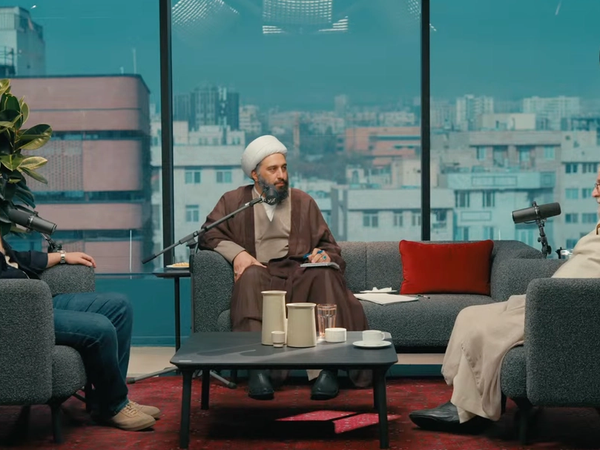
A Iranian cleric's skeptical remarks on some cherished aspects of Shi'ite Muslim religious history in a debate show has been met with insults and threats, underscoring the dangers of religious dissent in the theocracy.
The episode marks a rare public challenge to dogma in the Islamic Republic and the strength of opposition to any religious free thinking by stalwart backers of the system.
Abdolrahim Soleimani Ardestani, in a debate with fellow cleric Hamed Kashani circulated on video over social media, challenged the canonical story of the “martyrdom" of Fatemeh, a revered matriarch and the daughter of the prophet Mohammed.
A video of the the discussion on Youtube had garnered 17,000 comments, among them arguments strongly for and against his remarks.
He argued that if her husband the first Shi'ite Imam, Ali, had merely watched events unfold, he would be “complicit in the killing," in an important challenge to the notion that the central figure in early Islamic history was a paragon of justice.
Ardestani went to attribute the death of the ninth Shi'ite Imam, Javad, to the jealousy of his wife and said mourning such an event centuries was misguided.
State-appointed eulogists, who lead the faithful with chants before prayers, tore into the maverick cleric on Friday according to videos which circulated on social media.
"Damn that dishonorable Ardestani bastard with no roots, all the way till Judgment Day," said one eulogist, Hossein Sotoudeh.
Officials signal punitive response
Mohammadali Amani, secretary-general of the Islamic Coalition Party, urged legal action against Ardestani without naming him, saying on X that insulting Shi'ite sanctities was “an unforgivable sin.”
Cleric Alireza Sanjari Araki, responding to a religious query, said that denying the martyrdom of Fatemeh or the “absolute guardianship of the Ahl al-Bayt” could place a person outside Shi'ite doctrine and subject them to rulings of unbelief.
He was referring to the family of the Prophet Mohammed from whom the Fatemeh, Ali and Javad hailed. The Shi'ite tradition regards them as holy spiritual and political figures.
Tasnim News wrote that the subject was inherently “a matter of honor” for Shi'ites.
Social-media backlash widens
Pro-government users have inundated Ardestani with verbal abuse, while others condemned the attacks and defended his right to question historical narratives.
A social media userr going by the name Mohammad Hossein Rajabloo said Ardestani needed to quit his neighborhood otherwise his home would be attacked.
But another user wrote that verbal violence by eulogists “goes beyond a jurisprudential dispute,” adding that divergent views are now met “not in forums for free inquiry, but with crude language from public pulpits.”
Others argued that critical reasoning threatens entrenched interests or that his questions did not warrant such escalation.
Reformist cleric Mohammadali Abtahi said former president Mohammad Khatami objected to Ardestani’s remarks in a recent meeting, arguing they harm the cause of religious reform.
The moderate Mardomsalari Party called the cleric’s comments “coarse” and contrary to Shi'ite beliefs but said violence, or attacks on his home were unacceptable and violated freedoms of expression and belief.
The confrontation underscores the Islamic Republic’s long record of harsh responses to perceived theological dissent, evoking past cases such as the decades-long targeting of author Salman Rushdie.
Rushdie was left with serious injuries including the loss of an eye when he was stabbed while giving a talk in the United States in 2022.
The attempted murder is believed to have been inspired by the fatwa issued by the Islamic Republic’s founder Ruhollah Khomeini against Rushdie for his novel The Satanic Verses.