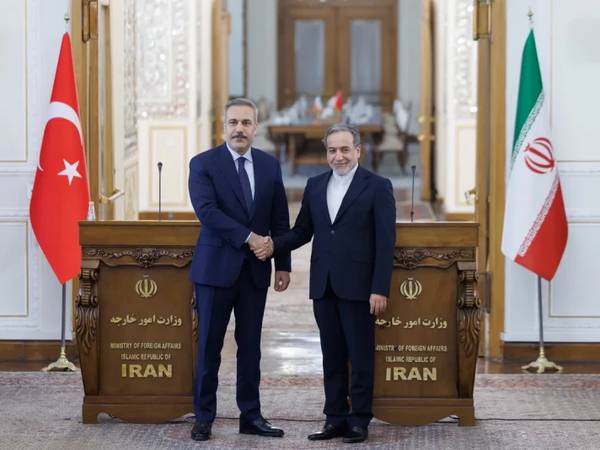
Simultaneous visits by senior Turkish and Saudi officials to Tehran last weekend were widely seen as a move by the two US allies to explore new channels to manage rising regional tensions through dialogue with Iran.
Turkish Foreign Minister Hakan Fidan’s visit was particularly notable. He met not only with Foreign Minister Abbas Araghchi but also with Iran’s president, the parliamentary speaker, and the secretary of the Supreme National Security Council.
Saudi deputy foreign minister Saud bin Mohammed Al Sati also held separate talks with Iran’s foreign minister and senior officials.
Expanded diplomatic engagement signals strategic intent
The scope of these engagements suggested that the trips were not ceremonial visits but part of a deeper, multilayered conversation on regional security and economic dynamics, reinforcing the perception that both Ankara and Riyadh sought structured dialogue with Tehran at a moment of heightened regional uncertainty.
Iranian media argue that overlapping crises—ranging from concerns of a new military confrontation between Iran and Israel to instability in Syria—has compelled major Middle Eastern actors to search behind closed doors for common ground and shared strategies.
Yet, not all experts believe these visits will produce breakthroughs. “The trips by Turkish and Saudi officials resemble goodwill gestures and attempts to assert regional roles more than representing practical solutions,” international affairs analyst Ali Bigdeli wrote in the reformist Sazandegi newspaper.
Syria’s central role
Ankara, Riyadh, and Tehran view Syria as a critical arena where their security interests and regional influence intersect, pushing them toward cautious coordination despite deep differences. Accordingly, Syria appears to have featured prominently in the Tehran talks on Sunday.
“Iran, Turkey, and Saudi Arabia each have their own priorities regarding Syria and Syria’s strategic weight makes it impossible for any of them to overlook or bypass it,” a commentary in Donya-ye Eghtesad argued.
“Even so, all three have come to recognize the need for a workable common ground—one that allows cooperation to persist, preserves regional stability, and keeps diplomatic channels open,” the commentary added.
Jaafar Haghpanah, a university professor and Turkey specialist, told Khabar Online: “In Syria, a shared concern for both countries is preventing it from becoming an arena for Israeli influence. Both also fear Syria turning into a failed state and a haven for extremist movements.”
Rising anxiety over a renewed Israel–Iran clash
Concerns about a potential new round of hostilities between Iran and Israel have intensified and prospects of nuclear talks with Washington currently seem slim.
Meanwhile, Israel’s state radio reported last week that Tehran was accelerating preparations for a potential confrontation and Israeli fighter jets reportedly conducted threatening flights over Iraq close to Iran’s borders.
Such developments have contributed to anxiety in the region and further market instability in Iran. The rial has weakened more against the US dollar in recent days, a shift widely interpreted as reflecting fears of possible military escalation.
Ankara and Riyadh acting as intermediaries?
The combination of military activity and sensitive diplomatic exchanges has fueled debate that Turkey and Saudi Arabia may be exploring a mediatory role or delivered messages from the US government.
Foreign Ministry spokesperson Esmail Baghaei categorically denied the claim on Monday, saying reports of message-passing from the American president were “not accurate.”
However, Ahmad Bakhshayesh Ardestani, a member of Iran’s National Security and Foreign Policy Committee, said it was “not impossible” that the visitors carried messages from Washington. He argued that Iran would not accept the reported US conditions for renewed talks.
According to lawmaker Mojtaba Zolnouri these conditions were “zero enrichment, ending cooperation with resistance groups in the region, and reducing Iran’s missile range.”
Sources in Washington told Iran International last week that Washington reaffirmed these three conditions in response to a letter allegedly sent by President Massoud Pezeshkian through Saudi channels requesting mediation for renewed dialogue.
Saudi and Turkish officials have not commented on the issue.