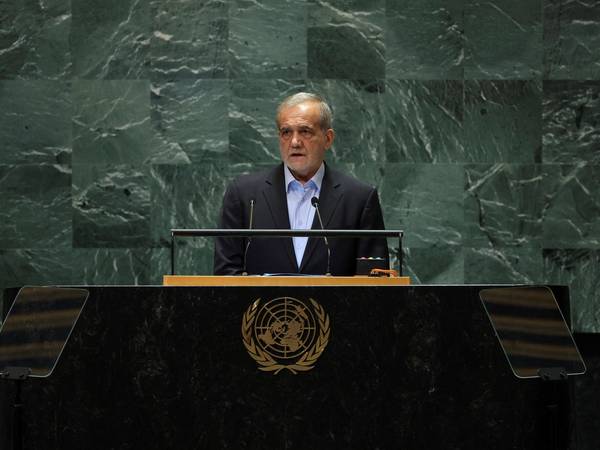
The United States will ensure that foreign visitors pose no threat to its national security, the State Department told Iran International when asked whether the Iranian delegation would be issued visas to attend this year's UN General Assembly in New York.
While the United States is generally obligated under the UN Headquarters Agreement to issue visas to representatives of member states, the Trump administration "will not waver in upholding American law and the highest standards of national security and public safety in the conduct of our visa process," a State Department spokesman said.
"Ensuring that foreign visitors to the United States do not pose a threat to US national security or public safety remains a paramount priority of the US government," the spokesperson added in response to Iran International's inquiry.
The State Department said it does not comment or speculate on individual cases due to visa confidentiality, leaving it unclear whether Iranian officials will be allowed to travel to New York this year.
The comments come as the United Nations prepares to host its annual General Assembly session next month, when world leaders gather in New York for high-level meetings.
Secretary of State Marco Rubio rescinded the visas of Palestinian President Mahmoud Abbas and 80 other officials ahead of the UN General Assembly, the State Department said on Friday, though Palestinian representatives assigned to the UN mission were granted exceptions.
Visa for Iranian officials
Last year, the United States faced criticism from members of the Iranian diaspora and activists over its decision to issue visas to President Masoud Pezeshkian and his delegation to attend the UNGA.
The question of visas for Iranian delegations to the UN has been a recurring point of friction between Washington and Tehran, particularly during President Donald Trump’s previous term.
In 2019, Foreign Minister Mohammad Javad Zarif was granted a visa to attend the UNGA in New York, but his movements were tightly restricted to a few blocks around UN headquarters.
The US also has a history of denying visas to officials of the Islamic Republic. In 2014, the White House refused to issue a visa to Iran’s nominee for UN ambassador, Hamid Aboutalebi, due to his involvement in the 1979 seizure of the US embassy in Tehran.